How to Pace Charades Rounds So Nobody Tunes Out
A charades game can die even when the prompts are good. The first few turns get laughs, then one round drags, the same confident players keep acting, and the rest of the room starts watching instead of joining.
That is usually a pacing problem, not a prompt problem. A generator helps most when it removes prep and keeps the next turn ready. The site is strongest when you use it that way: not as a giant list to admire, but as a fast reset button that keeps the room moving.
A live charades prompt generator works best when the host also controls rhythm. You do not need complicated rules. You just need short rounds, quick swaps, and a reason to refresh the energy before the game gets stale. Good pacing is usually visible before anyone says it out loud. Players start joking more than guessing, one team keeps waiting for their turn, and the host spends longer choosing the next prompt than the group spends acting it out. That is your cue to tighten the structure instead of blaming the players.

Why Pacing Matters More Than Having Endless Prompts
Why short rounds beat one long blur of guessing
People stay engaged when the room changes often. One actor, one guess, one laugh, one reset. That rhythm makes charades feel easy to join. That is one reason resources from Stanford and Yale favor low-stakes participation. It helps people interact early without overexplaining the activity (Stanford icebreakers resource).
Short rounds also help shy players. They know they will not be trapped in a long, awkward performance. A quick turn feels survivable. That matters more than having the funniest word list in the world.
When to swap actors, teams, or prompt styles
The room usually tells you when it needs a switch. If guesses are slowing down, if one team is dominating, or if the same 2 people keep volunteering, change something before the energy drops further.
You can swap the actor every turn, rotate teams every few rounds, or change the prompt style from easy actions to movies, animals, or silly category jumps. A flexible charades game tool makes that easy because you do not have to reshuffle paper cards or think up a fresh list on the spot.
A Simple Round Structure That Keeps Charades Moving
The easy start, the faster middle, and the reset round
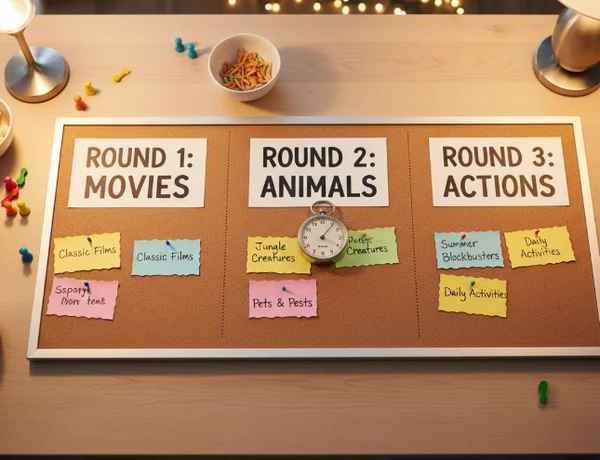
A 3-round structure works well for casual groups. Round 1 should be easy and fast so everyone understands the rhythm. Round 2 can move a little faster with harder or stranger prompts. Round 3 should act like a reset, not an escalation. Bring the pressure back down with funny or obvious prompts so the room finishes energized instead of tired.
For many groups, 60-second turns are enough. They are long enough for acting and guessing, but short enough that the room does not drift. If the group is especially big, shorter turns often work even better. You can also change what counts as a win between rounds. One round can reward speed. The next can reward funniest performance or best recovery after a bad clue. That kind of change keeps the game from feeling repetitive even when the format stays simple.
How to use the generator between rounds without killing energy
Do not stop the whole room every time you need a new prompt. The host should pull the next one while the current team is laughing, celebrating, or arguing about the last guess. That keeps the gap between turns tiny.
This is exactly where a party charades generator helps. The site is built around instant prompt access, and the blog expands that with ideas for themes, parties, and low-prep play. The best use of the generator is not during a dead pause. It is during the few seconds before the next person stands up. Hosts can make this even smoother by choosing one backup theme before the game starts. That way, if the room gets tired of movies or actions, you can switch to animals, jobs, or silly everyday objects without stopping to rethink the whole game.
What to Adjust for Families, Parties, and Shy Groups
When lower pressure creates a better game
Not every group wants harder words, louder competition, or nonstop acting. Families often do better with easier prompts and shorter turns. Mixed-confidence groups do better when the host openly normalizes bad acting and silly guesses. Low pressure keeps more people in the game.
The site's own boundaries support that light-touch approach. Its Terms describe the site as informational and entertainment content, offered "as is," for users 13 and older. Users under 18 need parent or guardian consent and supervision. That is a useful reminder that the tool is built for simple, casual play rather than high-pressure competition.
If the room includes hesitant players, let pairs act together for one round. You can also allow one free pass or let the group vote for the funniest performance instead of the fastest guess. You can also shift categories when the mood changes. Broad action prompts help early. Movie or character prompts help later once the room is warmer. A better game is the one people want to keep playing.
What to Remember Before Your Next Charades Round
The best charades night is rarely the one with the biggest prompt pile. It is the one with the cleanest rhythm, the quickest resets, and the fewest dead spaces.
Use short rounds. Change something before the energy drops. Keep the next prompt ready before the room goes quiet. That is how a simple generator turns into a smoother party game that people actually want to replay.
If the game starts to drag, do not blame the words first. Fix the pacing, and the prompts usually get funny again. A smoother round plan makes even simple prompts feel more playable and more memorable for everyone involved next time.