The Fascinating History of Charades: From French Salons to Modern Game Nights
Have you ever wondered where the hilarious, silent-acting game of charades comes from? One moment you're flailing your arms trying to act out "The Lion King," and the next, your friends are erupting in laughter. This beloved party game feels so modern and spontaneous, yet its roots stretch back centuries. It’s a game that has connected people through laughter long before smartphones and social media.
This journey through time will uncover the fascinating history of charades, from its elegant beginnings in French high society to its place as a staple of modern game nights. We'll explore how it evolved, spread across the globe, and adapted to the digital age. Ready to discover the story behind the fun? You’ll see how this classic game has been perfected for today's players with simple, accessible tools like our online generator.
How Charades Evolved: From Literary Riddles to Digital Generators
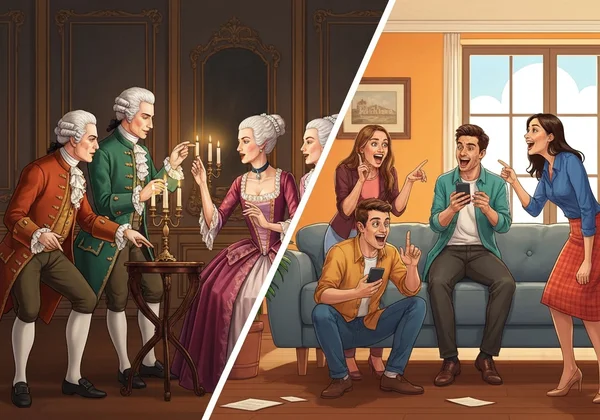
The story of charades begins not at a casual party, but in the sophisticated world of 18th-century France. It started as a literary riddle, a word game for the educated elite. The word 'charades' has interesting origins. It may come from the French word for 'chatter' or an Italian term for 'gossip.' This hints at the game's social nature. This early version was a verbal puzzle where each syllable of a word, and then the entire word, was described through clever clues.
Over time, this wordplay evolved into something much more theatrical. The French aristocracy, always looking for new forms of amusement, transformed the game into a performance. This laid the foundation for the silent, dramatic game we know and love today, setting the stage for its journey from exclusive salons to living rooms around the world.
The Aristocratic Beginnings of "Le Jeu de Charades"
The earliest form of charades, known as "Le Jeu de Charades" (The Game of Charades), was a popular pastime among French aristocrats. It was a game of wit and intellect, where players would pose riddles to describe parts of a word. For example, to guess "eyelash," a player might give a clue for "eye" and another for "lash."
This literary game required a good vocabulary and a quick mind. It was a way for the upper class to showcase their education and cleverness in a playful setting. It was less about physical comedy and more about intellectual sparring, making it a perfect fit for the refined atmosphere of the era's social gatherings.
How French Salons Popularized Non-Verbal Entertainment
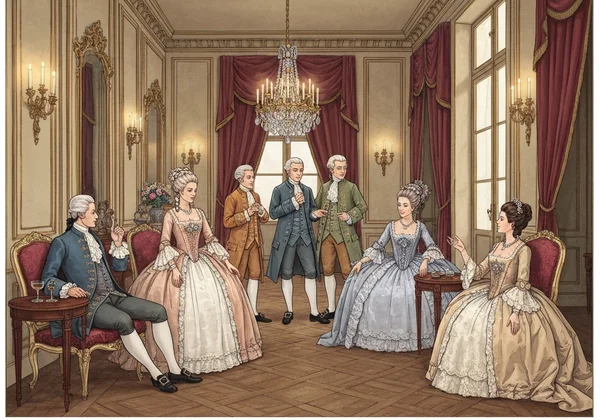
As the 18th century progressed, French salons became hubs of culture, art, and intellectual exchange. Within these gatherings, charades began to change. The verbal riddles evolved into "acted charades," where players would act out the syllables and the full word without speaking. This shift made the game more visual, dramatic, and accessible.
This new, non-verbal format became an instant hit. It broke down language barriers and allowed people to express themselves through universal body language and gestures. The theatrical nature of acted charades brought a new level of energy and laughter to the salons, transforming a quiet riddle game into the lively performance we recognize today.
Charades Spreads Across Europe and America
From its French origins, charades quickly captured the imagination of neighboring countries. The game crossed the English Channel, where it was enthusiastically adopted by the British. They added their own theatrical flair, and soon, charades became a common feature of Victorian-era parties and family gatherings.
The game's journey didn't stop there. As people emigrated, they brought their favorite pastimes with them. Charades traveled across the Atlantic to America, where it cemented its status as a quintessential family activity. Each culture added its own unique twist, but the core element of silent acting and guessing remained the same, proving its universal appeal.
British Adaptations and Theatrical Influences
When charades arrived in Britain, it was embraced with open arms. The Victorians, with their love for parlor games and amateur dramatics, found it to be the perfect evening entertainment. The game became more structured, often involving elaborate costumes and props as families and friends acted out scenes for one another.
Theatrical influences played a significant role in its British adaptation. With a rich history of stage performance, from Shakespeare to music halls, the British naturally incorporated elements of drama and comedy. This made the game less of a simple guessing game and more of a mini-theatrical production in the living room.
American Variations and Family Game Night Integration
In the United States, charades evolved into a more casual and inclusive game. It shed some of its formal, theatrical elements and became a staple of family game nights. Americans simplified the rules, making it easy for people of all ages, from young children to grandparents, to participate.
The focus shifted toward speed, fun, and teamwork. This is when charades truly became the game we know today—a go-to icebreaker and a reliable source of laughter. If you want to bring this tradition to your own family, you can start a game with words perfect for all ages.

Modern Charades: Digital Evolution and Cultural Adaptations
In the 20th and 21st centuries, charades has continued to evolve. It found a new audience through popular media, becoming a frequent segment on television game shows and a memorable scene in movies. This exposure introduced the game to new generations and solidified its place in modern pop culture.
More recently, technology has completely revolutionized how we play. The days of frantically scribbling ideas on scraps of paper are over. Digital tools have made the game more accessible and dynamic than ever before. This digital evolution ensures that the centuries-old tradition of charades remains vibrant and relevant in our fast-paced, modern world.
The Charades Renaissance in Television and Film
Charades experienced a major resurgence in popularity thanks to television. Game shows like Password and The $10,000 Pyramid often featured charades-like segments, bringing the excitement of the game into millions of homes. Talk shows, such as The Tonight Show Starring Jimmy Fallon, frequently feature celebrities playing charades, showcasing its fun and hilarious potential to a massive audience.
This media presence has kept the game fresh and exciting. Seeing famous actors and comedians struggle to act out a simple phrase reminds us all that charades is about having fun, not being a perfect performer. It has reinforced the game's status as a timeless source of entertainment.
How Digital Tools Revolutionize Traditional Charades
Today, technology has made playing charades easier than ever. Instead of struggling to think of words, you can use an online charades generator to get endless ideas instantly. These tools offer a massive advantage over the old paper-and-pen method.
Websites like CharadesGenerator.cc provide a seamless experience. You can choose from categories like movies, songs, or objects, and select a difficulty level to suit your group. Some even offer unique features like image-based prompts to spark creativity. This digital convenience means you can start a game anywhere, anytime, with just a few clicks.

A Modern Twist on a Classic Game
Our charades generator not only preserves this rich history but enhances it for modern players. By providing curated lists of words and ideas, we take the prep work out of the game, letting you dive straight into the fun. Our tool ensures a fair, balanced, and endlessly entertaining experience, carrying the torch of this centuries-old tradition into the digital age. This is how the history of charades continues to be written, one hilarious performance at a time.
Cultural Variations of Charades Worldwide
While the basic concept of charades is universal, many cultures have developed their own unique versions of the game. These variations reflect local traditions, languages, and forms of entertainment. Exploring these differences shows just how adaptable and beloved the game is across the globe.
From the silent, expressive mime traditions in Europe to the focus on communal storytelling in other parts of the world, charades has been shaped by the people who play it. This global footprint is a testament to the power of non-verbal communication and the shared human desire for play and connection. It’s why a good charades tool offers multiple languages to bring people together.
Silent Movies vs. Mime: European Charades Traditions
In Europe, charades was heavily influenced by the performing arts. The tradition of mime, particularly strong in France, shaped how players approached the game. The emphasis was on precise, artistic gestures and expressive body language to convey complex ideas without a single sound.
The advent of silent movies also left its mark. Early film actors had to tell entire stories through physical action alone, and this style of dramatic, sometimes exaggerated, performance found its way into charades. This created a version of the game that values artistry and storytelling just as much as guessing correctly.
Asian and African Charades: Non-Verbal Storytelling Techniques
In many Asian and African cultures, storytelling is a deeply communal activity. Charades in these regions often reflects this, with the game sometimes being used to act out traditional folktales or proverbs. The performance becomes a way of passing down cultural knowledge in a fun and interactive way.
The techniques used can also differ, sometimes incorporating elements of dance or group performance. The focus is often less on individual competition and more on the collective experience of creating and understanding a story together. This highlights the game's incredible versatility as a tool for both entertainment and cultural expression.
Bringing Centuries of Charades History to Your Next Game Night
From its origins as a literary riddle in French salons to its modern digital form, charades has had an incredible journey. It has survived centuries of change by adapting to new cultures and technologies, all while retaining its simple, joyful core. Through the centuries, charades has brought people together through connection, creativity, and laughter—proving that some things just get better with age!
Knowing this rich history makes the game even more special when you play it! The next time you gather with friends or family for a round of charades, remember that you are partaking in a tradition that has brought people together for generations. Now, it's easier than ever to continue that tradition.
Ready to make your own history? Join the fun millions are already enjoying! Visit CharadesGenerator.cc now to instantly access endless prompts that will have your friends laughing in no time. Let the games begin!
Frequently Asked Questions About Charades History
What is the origin of the word "charades"?
The word "charades" is believed to have originated in 18th-century France. While its exact source is debated, it is likely derived from the French verb charer, meaning "to chatter," or the Italian word scherzare, meaning "to jest" or "to joke."
How has charades changed over time?
Charades began as a verbal riddle game in French high society. It evolved into "acted charades," a non-verbal performance game, which then spread across Europe and America. In modern times, it has been popularized by TV and transformed by digital tools that make it easier to play than ever before.
What are the main cultural variations of charades?
Different cultures have their own take on charades. In Europe, it's heavily influenced by mime and silent film traditions. In some Asian and African cultures, the game is used for communal storytelling, acting out folktales or proverbs. These variations show how adaptable the game is.
How did charades become a popular party game?
Charades became popular because it is simple, requires no special equipment, and is suitable for all ages. Its migration to Britain and America, where it was adopted as a family parlor game, solidified its status as a party staple. Its ability to create laughter and break the ice makes it a go-to choice for social gatherings.
What role has technology played in modern charades?
Technology has made charades incredibly accessible. Online tools like a charades generator eliminate the need to brainstorm ideas, providing an endless supply of words and phrases. With features like categories, difficulty levels, and timers, you can get started in seconds, making the game perfect for any spontaneous get-together.